African American History
African American
History Tours
Learn the names, places, and stories of those whose legacies have shaped our community. Historic house tours offered daily Wednesday - Sunday; online tours available at any time.
African American History Tours
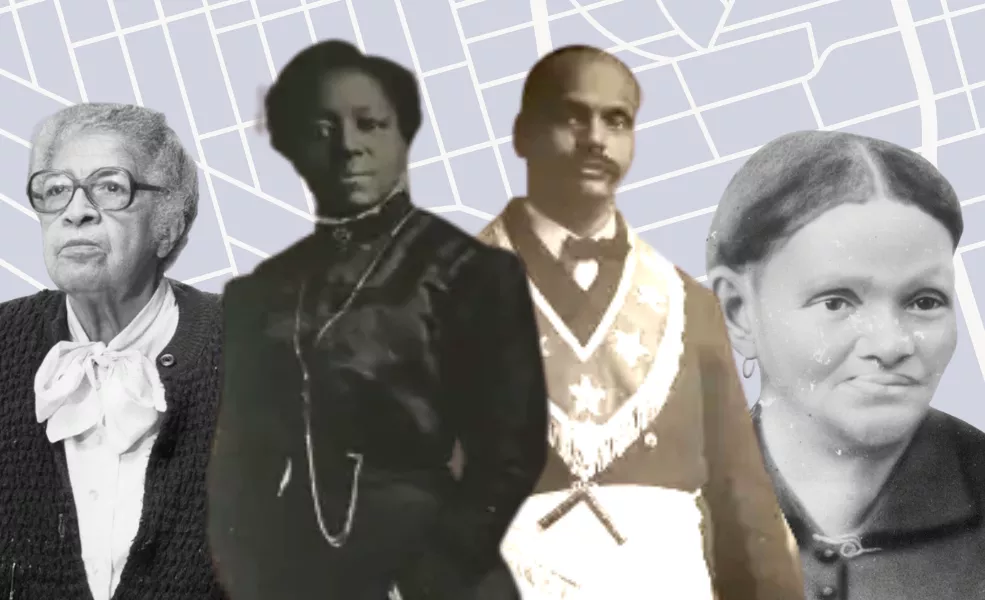
Since its establishment in 1786, Columbia has included a population of free Blacks, enslaved Africans, and African Americans whose labor, skills, and vision have been integral in the city’s physical, spiritual, and social evolution.
Over four centuries, the city’s Black community transformed itself from that of a predominantly enslaved population to a society whose members overcame the restrictions of Jim Crow and charted the course of the Civil Rights era. The story of this journey is now captured and shared at the Modjeska Monteith Simkins House and Mann-Simons Site on the Journey to Freedom Tour, The Museum of the Reconstruction Era Tour, and Hampton-Preston Mansion Tour.


Journey to Freedom Tour
Historic Columbia is offering a combined tour of both the Mann-Simons Site and the Modjeska Monteith Simkins House to learn more about Black history in Columbia.
Tour Times
Wednesday - Saturday: 1:30 p.m.
Sunday: 3 p.m.
Buy Tickets
Learn More


The Museum of the Reconstruction Era
at the Woodrow Wilson Family Home
The nation's only museum dedicated to interpreting the post-Civil War Reconstruction period and South Carolina's only remaining presidential site, this distinctive circa-1871 Italian villa-style residence was home to a 14-year-old boy named "Tommy" Woodrow Wilson.
Tour Times
Wednesday - Saturday: 10:30 a.m.
Sunday: 1:30 p.m.
Buy Tickets
Learn More


House Tours are Supported by

Online Walking Tours
Explore our online tours of neighborhoods and districts central to Columbia’s African American history. Tours can be done on your computer or turn it into a walking tour using your mobile device. Select any of the neighborhoods below and begin your tour.
-
African American Heritage Sites
Over the course of four centuries, Columbia’s black community transformed itself from that of a predominately enslaved population to a society whose members overcame the restrictions of Jim Crow and charted the course of the Civil Rights era. The story of this journey remains today within the home places, workplaces, and resting places of Columbia’s African American community.
-
Barhamville-Kendalltown
Established in the 1890s as the small African American suburb “Kendalltown,” this neighborhood was developed on land previously associated with Barhamville Academy, a female school in operation during the mid-eighteenth century.
-
Lower Richland
Established as an agricultural area more than three centuries ago, Lower Richland features important sites documenting African American and American Indian experiences, including Congaree National Park.
-
Lower Waverly
Lower Waverly boasts diverse architectural styles and is protected as an architectural conservation district by the City of Columbia. This neighborhood was home to many professional and working-class African Americans who emerged as activists, educators and community leaders in the Civil Rights Movement.
-
Waverly
Waverly is listed as a Historic District on the National Register of Historic Places and is protected as an architectural conservation district by the City of Columbia. By the early twentieth century, this neighborhood became known as a self-contained, self-sustaining black community featuring many middle- and upper- class African American residents, among whom were leaders within spiritual, business, academic and professional circles.